
Parametric Wood Furniture for Modern Benches, Desks & Shelves
Updated: Sep 6
A beautifully designed room can still feel incomplete when furniture ignores the architecture around it. A long hallway, a curved reception wall, or a home office with limited depth often needs pieces built around the space, not picked from a catalog.
This is where parametric wood furniture earns its place, offering shapes and dimensions that respond to a room instead of fighting it. The real question is how to choose the right piece, bench, desk, or shelf for the space you actually have.
Key Takeaway
Parametric wood furniture is designed around a room’s dimensions, function, and architecture.
Custom benches, desks, and shelves can provide a better fit than standard furniture.
It is especially useful for unusual spaces, specific dimensions, and design-led interiors.
The best choice depends on the space, intended use, and practical requirements.
What Makes Parametric Wood Furniture Different?
Think of it as furniture with built-in flexibility. Dimensions, proportions, and configuration can be planned before fabrication, so the result fits the room rather than forcing the room to adjust.
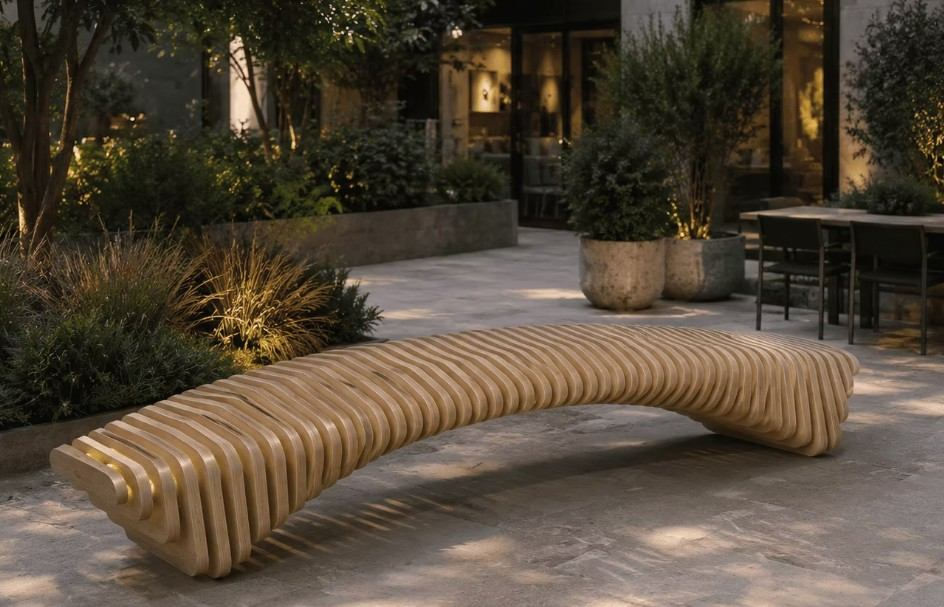
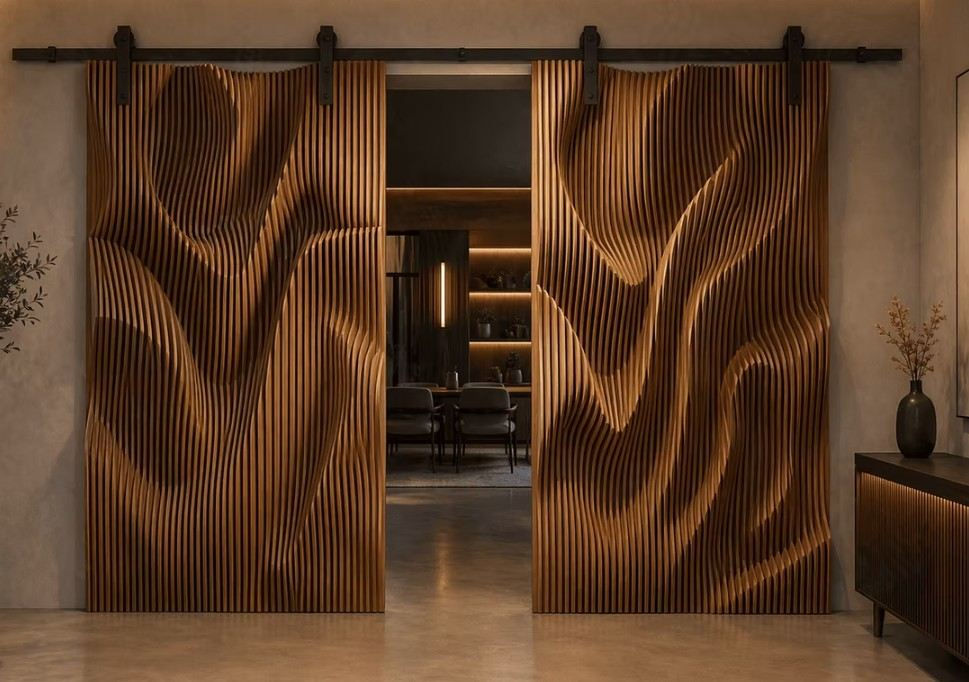
This usually shows up as a sculptural quality: curved slats, repeated panels, or forms that shift gradually along the piece. It's less a fixed look and more a system that can flex to different rooms.
The practical upside is furniture designed for your exact dimensions and use, instead of adjusting your room to fit off-the-shelf sizes. The room itself should lead the decision, not the style on offer.
Start With the Space, Not the Furniture
It's tempting to fall for a striking design first and worry about fit later. That order tends to cause problems.
Measure How People Move Through the Room
Circulation matters more than most people expect. A piece that looks proportionate on screen can block a doorway or crowd a walkway once installed.
Think about how people move through entryways, offices, and reception areas, and leave enough clearance for comfortable passage. Anything too bulky for a narrow room will look out of place.
Decide What the Piece Needs to Do
Function should come before aesthetics. Is it for seating, working, storage, display, or dividing an open space? Answering this early narrows the choices considerably. Once the purpose is clear, the right furniture category becomes much easier to narrow down
Choosing a Parametric Bench for Everyday Spaces
A parametric bench tends to work best in transitional spaces: entryways, corridors, hotel lobbies, and reception areas where people pause rather than settle in.
Living rooms benefit too, particularly where a sculptural seat doubles as a visual anchor. Consider seat length against how many people will use it at once and depth relative to actual use.
A bench for quick lobby seating doesn't need the depth of one meant for lounging at home. It's also worth deciding early whether the piece sits indoors or faces outdoor conditions, since that affects the wood treatment and finish.
What to Look for in a Parametric Desk
Whether for a home office or a commercial reception counter, a parametric desk must still work as a desk first. Sculptural framing is appealing, but comfortable working dimensions, adequate depth, and proper legroom come before appearance.
Cable management and integrated storage are easy to overlook early on and frustrating to live without afterward. Commercial reception counters need to hold up under constant use while making a strong first impression. Residential desks tend to prioritize comfort and a quieter visual presence instead.
When a Parametric Wall Shelf Makes Sense
A parametric wall shelf can serve two purposes: purely decorative display or genuine functional storage. It helps to be clear which one you need before choosing a design.
A shelf that holds books and everyday items needs more usable depth than one that is mainly for display. These shelves are ideal for feature walls, offices, living rooms, galleries, and reception areas that would otherwise remain empty.
Consider the wall's dimensions, how the shelf will be mounted, what objects will sit on it, and how much visual density feels right. Not every wall calls for one.
Customizing Parametric Furniture for Different Interiors
Customization is one of the real advantages of parametric wood furniture, but it helps to know what can realistically change. Dimensions, finish, wood tone, layout, and configuration can usually be adjusted while the underlying design logic stays consistent.
A bench might need a shallower seat to clear a narrow hallway, or a desk a wider return to fit a specific wall. A shelf's spacing can shift to suit taller objects rather than books.
Residential and commercial projects often ask for different things. A home might want warmth and a personal finish, but a commercial space demands uniformity across multiple units.
Adapting a piece to its surrounding architecture, rather than fitting standard furniture into an unusual space, tends to produce a result that looks intentional.
Is Parametric Furniture Right for Every Interior?
Not necessarily. Parametric wood furniture adds the most value when a room has unusual proportions, when architecture plays a strong visual role, or when custom dimensions genuinely matter to how a space functions.
Sometimes a traditional piece is better in a more minimalist interior or a room where furniture is background. The trick is to match the solution to the real need and not to the novelty of the approach.
Conclusion
Choosing between a bench, a desk, or a shelf isn't really about picking a style. The choice depends on how the space is used, how people move through it, and what its proportions allow.
Parametric wood furniture works best when these factors shape the decision from the start. If you're weighing up options for a specific room, it's worth discussing a custom solution with Zorka Furniture.
FAQ
What is Parametric Wood Furniture Used For?
It works for spaces where regular sizes don’t work well, odd proportions, feature walls, or areas where architecture plays a strong visual role.. Common applications include benches, desks, and shelving.
Is a Parametric Bench Comfortable for Everyday Seating?
Comfort does not depend on the category but on the particular design. Seat height, depth, and length should suit the intended use, whether for short-term lobby sitting or longer use at home.
Can a Parametric Desk Be Customized for a Home Office?
Yes, you can customize the sizes, storage, and cable management for a home office configuration without sacrificing the sculptural qualities that make these desks special.
How Much Weight Can a Parametric Wall Shelf Hold?
It will depend on the design, the material, the wall construction, and the way it is installed. There is no fixed weight capacity for every shelf, so the expected load should be discussed before finalising the design
Is Parametric Furniture Suitable for Commercial Interiors?
It is ideal for offices, hotels, reception areas, and hospitality spaces where furniture needs to make a visual impact and be genuinely durable in everyday use.


Comments