
Art Table: When Furniture Becomes Sculpture

How Zorka Furniture creates sculptural and parametric tables that combine art, architecture, natural wood, and everyday functionality.
What makes a table a piece of art?
Is it an unusual shape, a beautiful material, or the way it changes the atmosphere of a room?
At Zorka Furniture, we believe an art table is more than a functional surface with an interesting base. It is a piece of furniture conceived as a sculptural object — something that contributes to the architecture of a space while remaining useful in everyday life.
We create custom sculptural and parametric tables for residential and commercial interiors. Our designs explore flowing geometry, repetition, natural materials, and the relationship between solid forms and empty space.
Some tables are inspired by waves, landscapes, and organic structures. Others explore geometric repetition, symmetry, or the contrast between a visually complex base and a simple tabletop.
Every project begins with a question: How can we transform an ordinary piece of furniture into something that people want to look at, touch, and experience?
What Is an Art Table?
An art table is a functional piece of furniture in which artistic expression plays an important role in the design.
Unlike conventional tables, where the structure is often intended to remain visually unobtrusive, sculptural tables celebrate their geometry, materials, and construction.
The base may become the primary visual element. The tabletop may appear to float above an intricate wooden structure. Curves may change depending on the viewing angle.
A successful art table balances three elements:
Sculpture: A distinctive form that creates visual interest.
Architecture: Proportions and materials that respond to the surrounding space.
Function: A practical surface designed for its intended purpose.
The result is furniture that can serve as a coffee table, dining table, conference table, or decorative centerpiece without losing its artistic identity.
Art Table vs. Conventional Table
Feature | Conventional Table | Sculptural Art Table |
Primary purpose | Functional surface | Function and artistic expression |
Design | Standard shapes and proportions | Custom geometry and sculptural forms |
Base | Usually simple or visually secondary | Often the central design element |
Materials | Selected mainly for appearance and practicality | Selected for appearance, construction, and geometry |
Dimensions | Predetermined sizes | Can be developed for the space |
Visual impact | Complements existing furniture | Can become the room's focal point |
Customization | Usually limited | Dimensions, shape, materials, and finishes |
Neither approach is inherently better. A conventional table may be ideal for a straightforward interior.
But when the furniture itself is intended to contribute to the architecture, a sculptural art table offers a different set of possibilities.
Why We Create Sculptural Furniture
We started Zorka Furniture with the idea that furniture does not need to follow conventional forms.
A table does not always need four legs. A bench does not need to be rectangular. A reception desk does not need to look like a traditional counter.
We are interested in the space between furniture, sculpture, and architecture.
Our work explores how a functional object can create movement, depth, rhythm, and emotion through its physical form.
We do not create unusual furniture simply to make it look different. We create it because geometry gives us another way to express design.
A flowing table base can introduce softness into a room dominated by straight lines.
A geometric composition can create a sense of order within an open interior.
A sculptural wooden structure can introduce warmth into a contemporary space filled with glass, stone, and metal.
For us, these relationships are what make custom furniture interesting.
Parametric Tables: Geometry as a Design Language
One of the main directions of our work is parametric furniture design.
A parametric table is developed through a system of geometric relationships rather than being limited to a conventional furniture shape.
For example, a flowing table base can be created from a sequence of individual wooden profiles. Each profile changes slightly in height, width, or curvature.
When the components are assembled, those gradual changes form a continuous three-dimensional structure.
The result may resemble a wave, a natural landscape, or an abstract sculpture.
What Makes Parametric Tables Different?
Parametric design gives us the freedom to explore forms that would be difficult to achieve using traditional table construction.
We can create:
Flowing and wave-shaped table bases
Organic curves
Repeating geometric patterns
Sculptural circular structures
Changing heights and depths
Open architectural forms
Complex transitions between surfaces
Custom compositions developed around a specific tabletop
The design can be adjusted by changing its underlying proportions and geometric relationships.
This is particularly useful for custom projects where the dimensions must respond to a specific interior.
How a Parametric Table Is Constructed
A parametric table may look like a single flowing sculpture, but its construction can involve many individually shaped wooden components.
The final three-dimensional form is divided into a sequence of profiles.
Each profile contributes to the overall geometry.
Some components may be almost identical. Others change gradually to create curves, openings, or transitions.
When assembled in the correct order, these individual elements form the complete structure.
The relationship between the components is what creates the sculptural effect.
From a Flat Material to a Three-Dimensional Sculpture
Stage | What Happens | Why It Matters |
Concept | We explore the overall form and artistic direction | Establishes the identity of the table |
3D design | The sculpture is developed digitally | Allows proportions and geometry to be refined |
Geometric development | The form is divided into individual profiles | Translates the design into physical components |
Material selection | We choose suitable wood materials | Influences construction and appearance |
Manufacturing | Individual components are precisely produced | Maintains consistency throughout the structure |
Assembly | Components are joined into the complete form | Reveals the final three-dimensional geometry |
Finishing | Surfaces are refined and protected | Completes the visual and tactile character |
The finished table represents the relationship between all these stages.
Why We Use Premium Baltic Birch Plywood
One of our signature materials is premium Baltic birch plywood.
We use it not because we want to imitate solid wood, but because its characteristics are particularly well suited to the furniture we design.
Baltic birch plywood consists of multiple layers of wood veneer arranged with alternating grain directions.
This construction provides dimensional stability and makes the material suitable for precisely manufactured components.
For parametric furniture, where numerous profiles must align accurately, material consistency is particularly important.
The Advantages of Baltic Birch Plywood
Dimensional stability
Its layered construction helps reduce some of the movement associated with solid wood, although all wood-based materials remain sensitive to environmental conditions.
Precision
Baltic birch plywood is well suited to manufacturing complex profiles and repeated geometric components.
Strength
Quality plywood provides a useful balance of structural performance and workability for many furniture applications.
Design flexibility
Flat sheets can be transformed into intricate three-dimensional compositions through carefully designed components.
Natural appearance
The material retains the warmth and character of wood while offering a distinctive contemporary aesthetic.
We see Baltic birch plywood as an architectural material with its own identity.
It allows us to create furniture in which the material and the design are closely connected.
Oak Plywood and Other Wood Materials
Not every art table needs the same material.
For some projects, oak plywood provides a warmer and more traditional wood appearance while still allowing us to create complex sculptural geometry.
Other projects may incorporate hardwood elements or different materials depending on the design.
Comparing Materials for Sculptural Tables
Material | Visual Character | Typical Application |
Premium Baltic birch plywood | Light, contemporary, refined | Complex parametric bases and sculptural structures |
Oak plywood | Warm, natural wood grain | Luxury residential and commercial interiors |
Hardwood | Natural grain and distinctive character | Selected tabletops and structural details |
Glass | Transparent and visually lightweight | Showcasing sculptural table bases |
Quartz | Refined, substantial appearance | Selected custom tabletop applications |
Natural stone | Unique texture and visual depth | Statement tabletops where appropriate |
The final choice depends on the design, dimensions, intended use, and structural requirements.
For example, a large stone tabletop requires different support considerations from a lightweight wooden or glass surface.
Material selection is therefore part of the design process, not simply a decorative decision made at the end.
Why the Table Base Matters
In conventional furniture, the base is often treated primarily as a supporting structure.
In our art tables, the base frequently becomes the main sculptural element.
We explore how the structure can create a sense of movement while supporting the tabletop.
A series of curved wooden profiles can form a flowing sculpture beneath a simple glass surface.
A geometric base can create a strong contrast with a natural wood tabletop.
An open structure can allow light to pass through the table, creating changing shadows throughout the day.
The relationship between the base and tabletop is essential.
The tabletop provides function. The base gives the table its architectural identity.
Glass Top Art Tables
Glass is particularly interesting when working with complex parametric bases.
A transparent tabletop allows the wooden structure beneath it to remain visible from above.
Instead of concealing the sculpture, the glass becomes a subtle functional surface that preserves the visual character of the base.
Glass-top art tables can work particularly well in:
Contemporary living rooms
Luxury apartments
Hotel lounges
Executive offices
Reception areas
Galleries
Design studios
Depending on the project, the glass can be supplied separately and installed according to the final design specifications.
Wood and Stone Tabletops
Not every sculptural table needs a transparent surface.
A wooden tabletop can create a more unified composition, where the base and surface feel like parts of the same object.
Stone can introduce contrast between the natural warmth of wood and the visual weight of mineral materials.
The choice depends on the desired effect.
Tabletop | Design Effect | Considerations |
Glass | Reveals the sculpture beneath | Thickness, edge treatment, and support must be considered |
Natural wood | Creates a cohesive wooden composition | Grain, finish, and dimensional movement |
Quartz | Adds a refined contemporary surface | Weight and structural support |
Natural stone | Creates strong material contrast | Weight, handling, and installation |
Custom material | Allows greater architectural coordination | Compatibility with the base and intended use |
For custom projects, we can also develop the base around a tabletop supplied by the client or another fabricator.
How We Develop a Custom Art Table
Every custom table begins with an idea.
Sometimes a client sends us a photograph of a table they like.
Sometimes an interior designer provides a rendering or architectural drawing.
Other projects begin with a few dimensions and a description of the desired style.
Our task is to translate that initial concept into a functional piece of furniture while preserving its artistic character.
1. Understanding the Space
Before developing the form, we consider where the table will be placed.
Important factors include:
Room dimensions
Intended table size
Surrounding furniture
Available circulation space
Architectural style
Existing materials and finishes
Intended use
A sculptural coffee table for a residential living room requires a different approach from a large statement table in a commercial lobby.
2. Developing the Concept
The next stage is exploring the overall geometry.
We consider the relationship between the tabletop and base, the direction of the curves, the proportions, and how the table will appear from different angles.
For parametric designs, we also evaluate how the form can be translated into individual components.
3. Creating the 3D Model
The design is developed digitally.
A 3D model allows us to examine the geometry before manufacturing begins.
We can evaluate proportions, dimensions, clearances, and the relationship between individual elements.
For custom projects, the model can be presented to the client for review and refinement.
4. Selecting Materials and Finishes
Once the geometry is established, we select suitable materials.
The choice depends on the intended design, tabletop, construction requirements, and surrounding interior.
We also consider the desired wood tone and finish.
5. Manufacturing and Assembly
After the design is approved, the individual components are manufactured and assembled into the final structure.
Complex sculptural forms require careful attention to alignment, connection details, and finishing.
6. Final Finishing and Delivery
The completed table is finished according to the selected material and color.
Depending on its dimensions and construction, the table may be shipped assembled or in sections designed for final assembly.
Zorka Furniture manufactures custom furniture in the USA and provides nationwide delivery.
Custom Dimensions: Designing Around the Space
One of the greatest advantages of a custom art table is the ability to develop its proportions around the room.
A standard coffee table may be too small for a large seating arrangement.
A conventional dining table may feel visually heavy in an open-plan interior.
A custom design allows us to consider both function and appearance.
Art Table Dimensions by Application
Table Type | Design Priorities | Customization Possibilities |
Sculptural coffee table | Low profile, visual impact, circulation | Length, width, height, base geometry |
Artistic side table | Compact proportions, decorative character | Height, diameter, material, finish |
Dining art table | Seating, legroom, stability | Tabletop size, base configuration, material |
Executive office table | Function, equipment, architectural presence | Dimensions, storage, cable routing |
Conference table | Seating capacity, technology, circulation | Length, width, base, cable integration |
Lobby statement table | Sculptural impact, scale, surrounding architecture | Large custom dimensions and geometry |
These are design considerations rather than fixed product specifications. Every project is evaluated individually.
Art Tables for Residential Interiors
In residential spaces, a sculptural table can become the central element of a room.
A living room with simple furniture may benefit from a table with flowing organic geometry.
A minimalist interior can gain warmth and texture through a sculptural wooden base.
An open-plan residence can use a statement table to create a visual connection between different areas.
Sculptural Coffee Tables
Coffee tables are particularly suitable for artistic experimentation.
Because they are relatively low, their surfaces and bases can be viewed from multiple angles.
A sculptural coffee table can introduce movement into a living room without overwhelming the surrounding furniture.
Artistic Dining Tables
Dining tables present a different challenge.
The base must support the tabletop while allowing comfortable seating and legroom.
A custom sculptural dining table requires careful consideration of both geometry and everyday use.
The most successful designs balance visual expression with practical proportions.
Art Tables for Commercial Spaces
Sculptural furniture can also contribute to the identity of commercial interiors.
In these environments, furniture often needs to do more than provide a functional surface.
It can communicate the visual language of a brand, reinforce an architectural concept, or create a memorable focal point.
Our custom art tables can be developed for:
Hotel lobbies
Corporate offices
Executive suites
Reception areas
Luxury retail interiors
Galleries
Design studios
Hospitality spaces
Commercial lounges
For architects and interior designers, custom furniture provides an opportunity to coordinate geometry, materials, and proportions with the wider project.
Art Tables and Architectural Design
One of the most interesting aspects of sculptural furniture is its relationship with architecture.
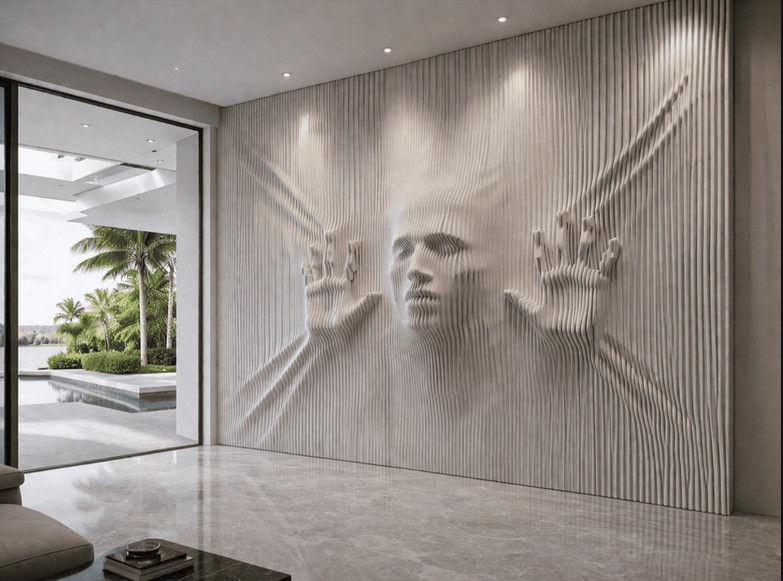
A table can repeat the curvature of a wall.
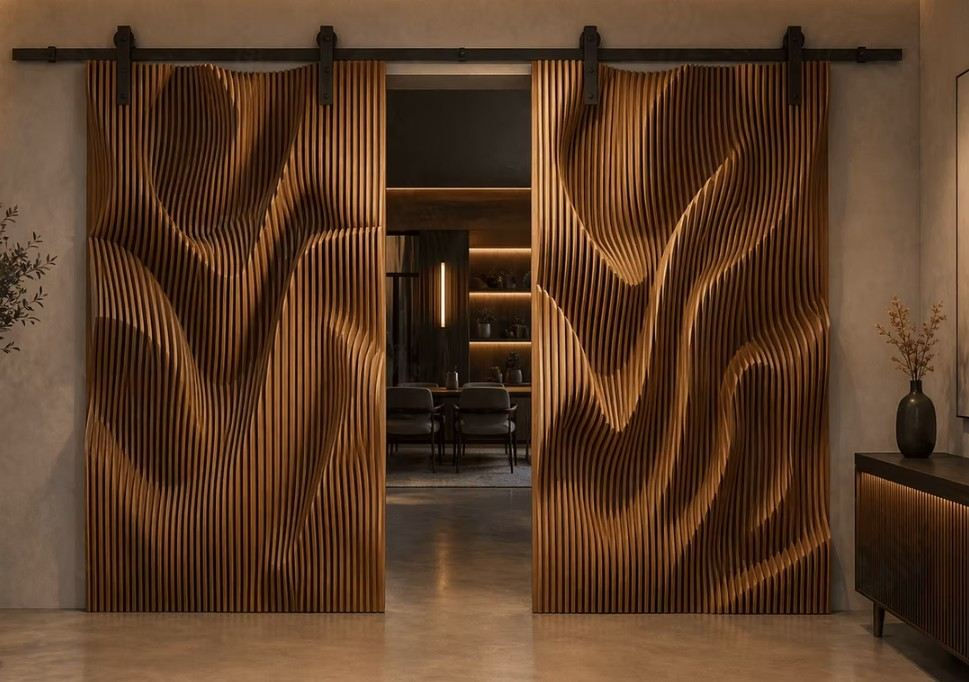
Its wooden profiles can complement a parametric installation elsewhere in the room.
Its finish can coordinate with cabinetry, flooring, or wall panels.
In some interiors, the table becomes part of a larger family of custom-designed elements.
At Zorka Furniture, we also create sculptural benches, reception desks, architectural wall panels, and other parametric furniture.
This allows us to explore related forms and materials across different elements of the same interior.
The goal is not to make every object identical.
It is to create a visual relationship between them.
Why We Prefer Made-to-Order Furniture
Mass production has clear advantages. It makes standardized furniture widely available and allows customers to purchase familiar designs quickly.
But it also creates limitations.
Manufacturers must select dimensions, materials, and configurations that appeal to a broad audience.
We prefer a different approach.
Made-to-order furniture gives us the freedom to design around a particular space and a particular idea.
We can adjust proportions, explore unusual geometry, change materials, and develop details that would be difficult to include in a standardized furniture collection.
This approach requires more planning and production time, but it also allows each project to have its own character.
For us, that is an essential part of creating furniture that feels closer to sculpture.
Is an Art Table Practical for Everyday Use?
A sculptural table should still perform its intended function.
An unusual design does not eliminate the need for a stable surface, appropriate dimensions, and suitable materials.
During development, we consider:
Intended use
Tabletop dimensions
Support configuration
Stability
Material selection
Surface finish
Cleaning and maintenance
Delivery and assembly
The objective is to create furniture that is visually distinctive without ignoring the practical requirements of everyday use.
Is a Custom Art Table Worth the Investment?
A custom art table is not necessarily the right choice for every interior.
If the goal is simply to provide an inexpensive functional surface, a conventional table may be more appropriate.
Custom sculptural furniture becomes especially interesting when the table is intended to play an important role in the overall design.
It may be worth considering when:
Standard dimensions do not suit the space.
The interior requires a distinctive focal point.
The project involves unusual geometry.
Materials need to coordinate with existing architectural elements.
A specific sculptural concept is important.
The table needs to be developed around a particular function.
The furniture is part of a larger custom interior project.

The value of an art table comes from the relationship between its design, materials, function, and surrounding architecture.
The Future of Sculptural Furniture
Digital design and advanced manufacturing continue to expand the possibilities of furniture design.
Forms that once would have been extremely difficult to develop can now be explored in three dimensions, refined digitally, and translated into physical components.
For us, however, technology is not the purpose of the work.
It is a tool that allows us to explore ideas.
The most important decisions remain artistic and architectural:
What should the object feel like?
How should it relate to the room?
What materials best express its form?
How will people experience it?
And how can it remain functional without losing its sculptural identity?
These are the questions that guide our work.
Why We Create Art Tables at Zorka Furniture
We believe furniture can contribute much more to a space than its immediate function.
A table can introduce rhythm.
It can soften a room through flowing curves.
It can create contrast between natural wood and stone.
It can become a sculptural centerpiece that changes appearance as someone walks around it.
And it can connect furniture with architecture in ways that conventional designs rarely explore.
That is why we continue developing parametric and sculptural furniture.
We want to create pieces that people experience not only as furniture, but as part of the space itself.
Our approach combines digital design, premium wood materials, carefully developed geometry, and hands-on craftsmanship.
Every project is an opportunity to explore a new relationship between form, material, and function.

Frequently Asked Questions About Art Tables
What is an art table?
An art table is a functional table designed with a strong emphasis on artistic expression. It may feature sculptural geometry, unusual materials, or a distinctive base that makes the table a focal point within an interior.
What is a parametric table?
A parametric table is developed using geometric relationships that control its form. It can incorporate flowing curves, repeated profiles, organic shapes, and complex three-dimensional structures.
What materials are used for sculptural art tables?
Materials depend on the design. At Zorka Furniture, we commonly use premium Baltic birch plywood and oak plywood for sculptural structures. Tabletops may incorporate wood, glass, quartz, or natural stone, depending on the project.
Can an art table be made in custom dimensions?
Yes. Width, length, height, base geometry, tabletop material, and finish can be developed around the dimensions and requirements of the space.
Can you create an art table from an inspiration image?
Yes. Photographs, sketches, renderings, and architectural drawings can provide a starting point for a custom design. The final geometry is developed according to the project's dimensions and construction requirements.
Are sculptural tables suitable for commercial interiors?
Yes. Custom art tables can be designed for hotel lobbies, corporate offices, executive suites, galleries, showrooms, hospitality spaces, and other commercial environments.
Do you deliver custom art tables throughout the USA?
Yes. Zorka Furniture manufactures custom furniture in the USA and provides delivery throughout the continental United States.
Create Your Own Art Table
Every sculptural table begins with an idea.
It might be a flowing wooden base beneath a glass tabletop, a geometric coffee table for a contemporary living room, or a large architectural centerpiece for a commercial interior.
At Zorka Furniture, we develop custom art tables and parametric furniture around your dimensions, materials, and design vision.
Send us your measurements, photographs, drawings, or inspiration images. We can adapt an existing concept or develop an entirely new design for your space.
Zorka Furniture — Where Furniture Becomes Art.

Comments