
Custom Wood Exterior Doors for Beautiful Home Entrances
Picking a front door comes down to small details, and those details end up defining how the whole entrance looks. With custom wood exterior doors, you get to decide the size, wood, panels, finish, and hardware together, rather than working from a design someone else already set. So the door gets built around your space and the style you're after. Some homes suit a simple, clean look, while others call for more detailed woodwork.
At Zorka Furniture, we create custom wood pieces with attention to dimensions, materials, finishes, and design details. In this guide, we will look at the key things to consider when choosing a wood exterior door and how different design choices can work together.
What Makes a Wood Exterior Door Custom?
A custom door is not a stock door in a different color. Customization can reach several decisions at once: the dimensions, the wood and its grain, the finish, the surface design and the hardware. The most important thing is to ensure the placement of the pieces. Even with great design, there might be an issue with the proportions, whereas with fine timber, there might be an issue with the finish. finish.
Design element | What to think about |
Dimensions | Size of the door relative to the opening and the wall around it |
Wood and finish | Grain character, tone, and whether it is stained, oiled or painted |
Surface design | Panels, lines, relief, texture, or a deliberately plain face |
Hardware | Handle style, metal finish, and visual scale |
Overall composition | How the door sits with windows, roofline, cladding, and steps |
Key Design Choices for Custom Wood Exterior Doors
1. Size and Proportion
Start by looking at the entrance as a whole. How wide and tall is the opening? What's around it: windows, the roofline, and a step or two? A narrow, tall doorway and a wide, low one call for quite different doors. Matching the door to those lines is usually what makes it look like it belongs. Check with the maker what's workable for your opening.
2. Wood and Finish
Wood and finish are best chosen together, since the finish decides how much of the grain you see. A stain or clear coat keeps it visible, while paint pushes the eye toward the shape of the door instead.
Take a sample outside and hold it against the wall. Brick, stone, and render each change how a wood tone looks, and a name on a swatch won't show you that. How the wood and finish will cope with weather depends on the species, the finish, the installation, and your climate, so it's a question for whoever builds the door.
3. Panels, Patterns, and Surface Details
Some of the best doors are almost plain, just good timber and good proportions. If you do want panels, grooves, or a carved detail, think about what the house already has going on. A façade with lots of stonework or decorative windows tends to look better with a quieter door. A plain, modern one can take something bolder.
4. Hardware and Other Details
Handles and hinges sit on the surface of the door, so they affect the look whether or not you've given them much thought. A long vertical handle works well on a tall door. A small, simple one lets the wood take center stage. Size is where people slip up, because a big handle can overwhelm a narrow door and a tiny one gets lost on a busy surface. Locks and security depend on your project, so settle those with the manufacturer and installer.
Designing the Door Around the Home
The entrances that work best usually have at least one visual thread tying the door to the rest of the house. It might be a timber tone repeated in a soffit or gate, a line that picks up the window frames, or a geometric motif that also appears inside. Nothing has to match exactly. Repeating one material, one tone, or one direction of line is often enough.
Architectural style matters here too. A contemporary house built on strong horizontals might call for a door whose lines run the same way. A home with a more organic, rustic character can lean harder on grain and natural variation. And if you aren't sure the door suits the house, a good test is to sketch or mock up the elevation, with the surrounding materials, and see whether the door reads as part of it.
Connecting Exterior and Interior Woodwork
An entrance door often sets a material language that the interior can continue. Custom made wood furniture, built-in pieces, and architectural wood elements can share tones, grain direction, or detailing with the front door without any of them being identical. The connection can be as light as a related finish or a repeated line.
This is also where wood interior doors come into the picture. The front door is seen from outside, but the first thing a visitor sees once they step in is often the hallway and the doors leading off it. If those share a wood tone or a surface idea with the entrance, the house starts to feel designed as a whole. our custom home furniture work follows that same logic: made-to-order pieces developed around dimensions, materials, colors, and style.
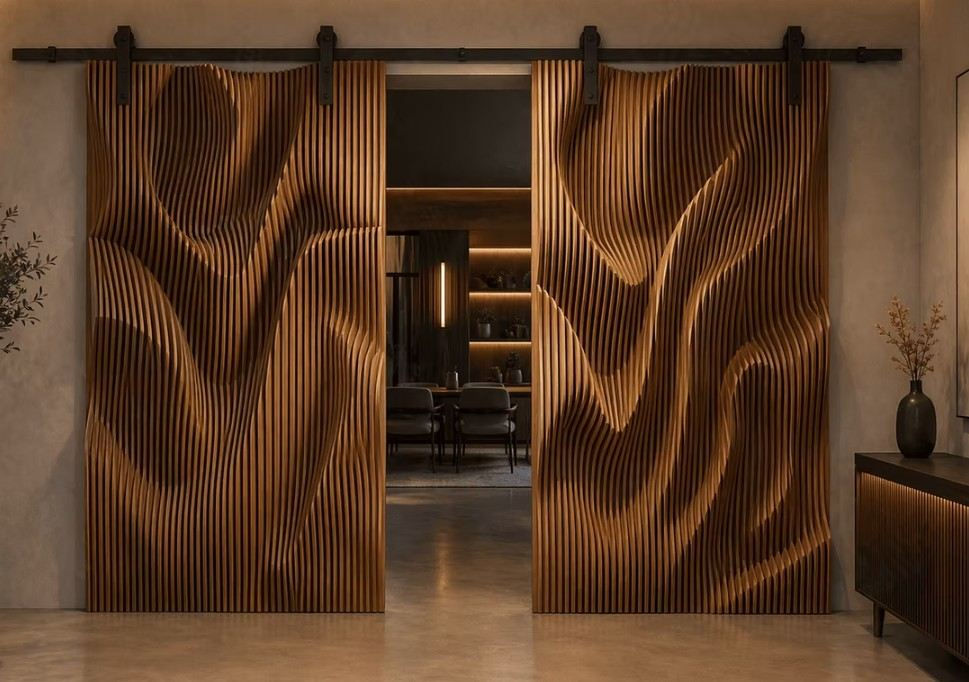
Our range also includes Custom Sliding Doors, which suit interior transitions, such as dividing a living area from a study or enclosing a closet or passage, where a swinging door would take up space. They are a wood interior Doors solution, not an alternative to an exterior entrance door, but they illustrate how a door can be designed as an architectural element in its own right.
When a Custom Door Makes Sense
A standard door is a perfectly reasonable answer when its size, style, and finish already suit the entrance. Custom becomes worth exploring when something about the project asks for more control, for example:
The opening has unusual dimensions that stock sizes don't fit well
The house has a strong architectural identity, and the door needs to respond to it
A specific wood tone or finish has to coordinate with other materials
you want a particular panel layout, texture, or surface treatment;
The entrance is part of a larger custom architectural or renovation project.
It is not about adding complexity for its own sake. It is about having enough say over the details that matter to get a door that fits.
Design Examples From Our Collection
Our current sliding-door collection is made for interiors, so these designs shouldn't be read as exterior door specifications. The collection includes Water Ripple, Sacred Eagle, Sacred Spirit, Sahara Dunes, and Zeus, and together they show what happens when a door is treated as a piece of design rather than a functional divider.
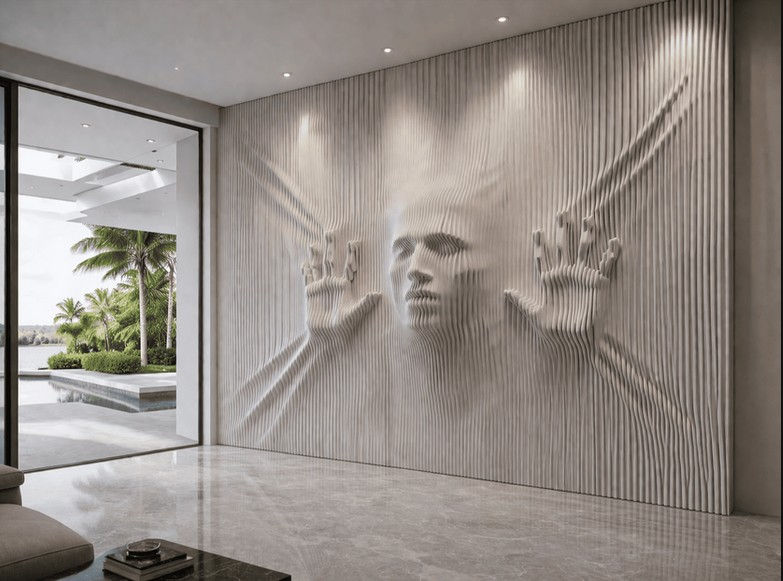
Sacred Eagle is sculptural of them. It uses a parametric eagle composition built from layered elements, with Baltic birch, birch, or oak plywood options, and it is offered as a single or double sliding door in custom dimensions and finishes. It is designed for contemporary interiors.
For anyone planning an entrance, the takeaway is not to copy a motif. It is to notice how surface depth, proportion, and material choice work together when a door is designed for a specific space and to ask the same questions of your own project.
Practical Things to Consider Before Starting
Good preparation makes the design conversation faster and more useful. Before contacting a maker, it helps to gather:
accurate measurements of the opening, plus clear photographs of the entrance from a few angles;
architectural drawings or elevations, if you have them;
images of the surrounding materials, such as brick, stone, cladding, or window frames;
reference photos of doors, finishes, or details you like, and some you don't;
a rough idea of the hardware style and any practical requirements;
your thoughts on how the entrance should relate to the interior.
Our custom work can begin from dimensions, drawings, sketches, or inspiration images. Finish, configuration, installation conditions, and construction details should all be confirmed before the design is approved.
A Door Designed for the Home, Not Just the Opening
Proportion sets the starting point. Wood and finish establish the material character. Panels, grain, and surface detail give the door its visual language, and hardware completes it. Taken one at a time, each choice is simple. The work is in making them agree with each other and with the house.
If you are planning an entrance, begin with the architecture and the practical requirements, then build the door around them. When you are ready to talk it through, you can explore Zorka Furniture's custom work or send us your dimensions and reference images.
Frequently Asked Questions
1. How do I decide how much detail the door should have?
Look at the façade first. A plain house can support a more detailed door, while a busy façade often looks better with a calmer one. There is no fixed amount that is correct, and the aim is balance.
2. Does the front door need to match my interior woodwork?
No. Related tones, similar grain direction, or a repeated geometric idea can create continuity without making the exterior and interior look identical.
3. Can the size of a custom door be adjusted to my opening?
Custom projects are generally developed around project dimensions, but what is possible depends on the material, construction, and installation requirements. Confirm those with the fabricator before ordering.
4. Should I choose the finish before or after the pattern?
Ideally, you consider them together. Finish changes how visible the grain is, which affects how a panel layout or surface detail reads. Looking at samples against the actual façade helps.
5. Can interior sliding doors be used as an entrance door?
No. The current sliding-door collection is made for interior use. They are useful as design references and for continuing a wood design language inside the home.


Comments