
Modern Office Desk Design: Why a Wooden Office Desk Defines the Contemporary Workplace
Updated: Jul 31

The office has evolved dramatically over the past decade. It is no longer simply a place where work gets done—it has become an extension of a company's culture, values, and identity. Every design decision, from lighting and materials to furniture and layout, influences how employees feel, collaborate, and perform throughout the day.
At the center of this environment sits one of the most important pieces of furniture: the office desk.
Far beyond providing a work surface, a modern office desk shapes the entire atmosphere of the workspace. It establishes visual order, supports productivity, reflects a company's professionalism, and often becomes one of the first elements visitors notice when entering an office.
Today, architects and interior designers increasingly view office furniture as part of the building's architecture rather than simply equipment. As a result, custom wooden office desks have become one of the defining features of contemporary workplace design.
Why the Office Desk Matters More Than Ever
The shift toward open workspaces, hybrid offices, and collaborative environments has fundamentally changed how office furniture is designed.
Instead of filling rooms with identical workstations, companies now invest in carefully planned environments where every piece contributes to employee wellbeing and brand perception.
A thoughtfully designed office desk provides much more than a place for a computer.
It helps:
Improve workplace organization
Support employee comfort
Increase productivity
Strengthen company branding
Create a premium first impression
Encourage collaboration
Enhance the overall architectural character of the office
The best office environments feel intentional. Every material, proportion, and detail works together to create a cohesive experience.
Why Designers Continue to Choose Wood
Despite advances in engineered materials, glass, aluminum, and composites, wood remains one of the most desirable materials for modern office furniture.
Its appeal goes beyond aesthetics.
Modern workplaces often feature concrete floors, glass partitions, exposed ceilings, steel framing, and minimalist finishes. While visually impressive, these materials can sometimes create environments that feel cold and impersonal.
Natural wood introduces warmth, texture, and balance.
It softens contemporary architecture while preserving the clean lines expected in professional interiors.
For this reason, wooden office desks remain a preferred choice for architects designing:
Executive offices
Creative studios
Law firms
Medical practices
Corporate headquarters
Design agencies
Technology companies
Luxury commercial interiors
Wood communicates quality, craftsmanship, and permanence—qualities that many businesses want their clients to associate with their brand.
Standard Office Desks vs. Custom Office Desks
One of the most significant differences in modern office design is the growing preference for custom furniture.
Feature | Standard Office Desk | Custom Wooden Office Desk |
Dimensions | Fixed sizes | Built to exact specifications |
Materials | Limited options | Premium architectural materials |
Storage | Standard layouts | Fully customized solutions |
Appearance | Mass-produced | Unique architectural design |
Brand Identity | Generic | Tailored to company image |
Long-Term Value | Standard | Premium investment |
A custom office desk allows businesses to create furniture that fits both the space and the way people actually work, rather than forcing employees to adapt to standard dimensions.
The Role of Natural Materials in Workplace Design
Over the past several years, one trend has remained remarkably consistent across commercial interiors: the return of natural materials.
Research and practical experience have shown that work environments incorporating wood and other natural finishes often feel more welcoming and less stressful than spaces dominated entirely by artificial materials.
From a designer's perspective, wood serves several important functions:
Design Benefit | Impact on the Workspace |
Natural warmth | Creates a more comfortable atmosphere |
Organic texture | Adds depth without visual clutter |
Timeless appearance | Avoids rapidly changing design trends |
Material authenticity | Reinforces premium quality |
Architectural flexibility | Complements both minimalist and luxury interiors |
Rather than competing with modern architecture, natural wood enhances it, creating workplaces that feel sophisticated, balanced, and comfortable throughout the day.
Designing Around the Office Desk
One of the most common mistakes in office design is treating the desk as an isolated piece of furniture.
Professional designers instead consider the office desk as the central element around which the workspace is organized.
Lighting, flooring, storage, acoustic treatments, shelving, and circulation paths should all work together to support the desk rather than compete with it.
When these elements are designed as a cohesive system, the result is an office that feels calm, functional, and visually refined rather than crowded or improvised.
A truly exceptional office isn't created by adding more furniture—it is created by choosing better furniture. A thoughtfully designed wooden office desk becomes more than a workstation; it becomes the architectural centerpiece that defines how the entire workspace is experienced.
Choosing the Right Office Desk

Selecting an office desk is one of the most important decisions when designing a productive workspace. The desk is used every day, often for many hours at a time, so its dimensions, materials, layout, and functionality directly influence comfort and efficiency.
A well-designed office desk should complement both the architecture of the space and the daily workflow of the people using it.
Before choosing a desk, consider the following questions:
How many people will use the workspace?
Will the desk be used primarily for computer work, meetings, or creative tasks?
How much storage is required?
Is cable management important?
Will the desk become a visual focal point or blend into the interior?
Does the office require future flexibility or expansion?
Answering these questions early allows designers to specify furniture that remains practical for years rather than becoming outdated as business needs evolve.
Office Desk Shapes Compared
Different office layouts require different desk configurations.
Desk Type | Best For | Advantages |
Straight Desk | Individual workstations | Clean appearance, maximum flexibility |
Executive Desk | Private offices | Premium appearance, generous workspace |
L-Shaped Desk | Multi-tasking environments | Additional work surface and storage |
U-Shaped Desk | Executive offices | Maximum organization and productivity |
Collaborative Desk | Team environments | Encourages communication and teamwork |
Custom Parametric Desk | Design-focused offices | Architectural centerpiece with unique identity |
The ideal desk depends on the workflow, available space, and overall design concept rather than following temporary trends.
Why Custom Office Desks Are Becoming the Standard
Modern companies increasingly recognize that office furniture represents an investment rather than an expense.
A custom office desk allows businesses to create furniture tailored specifically to their operations.
Benefits include:
Optimized workspace dimensions
Improved organization
Better cable management
Integrated storage solutions
Brand-specific design language
Premium architectural appearance
Long-term durability
Greater employee satisfaction
Instead of adapting daily operations to standard furniture, companies can design furniture around the way they actually work.
Ergonomics Meets Architecture
Beautiful furniture should never compromise comfort.
One of the biggest misconceptions in office design is that ergonomics and aesthetics are competing priorities. In reality, the most successful workplaces combine both.
Professional office furniture should support healthy posture while maintaining a refined architectural appearance.
Important ergonomic considerations include:
Comfortable desk height
Sufficient legroom
Proper monitor positioning
Easy access to frequently used equipment
Efficient cable management
Logical storage placement
These details reduce physical fatigue while improving concentration and productivity throughout the workday.
Office Desk Materials
Material selection significantly influences both the appearance and performance of office furniture.
Material | Appearance | Durability | Best Application |
Birch Plywood | Contemporary layered look | ★★★★★ | Creative studios and modern offices |
Oak Plywood | Rich natural grain | ★★★★★ | Executive offices and premium interiors |
MDF (Painted) | Seamless contemporary finish | ★★★★☆ | Minimalist corporate interiors |
Glass | Light and elegant | ★★★★☆ | Conference areas and executive spaces |
Stone or Quartz Top | Luxury appearance | ★★★★★ | Reception desks and executive offices |
Choosing materials should always support the architectural concept while meeting the practical requirements of daily office use.
Modern Office Design Trends
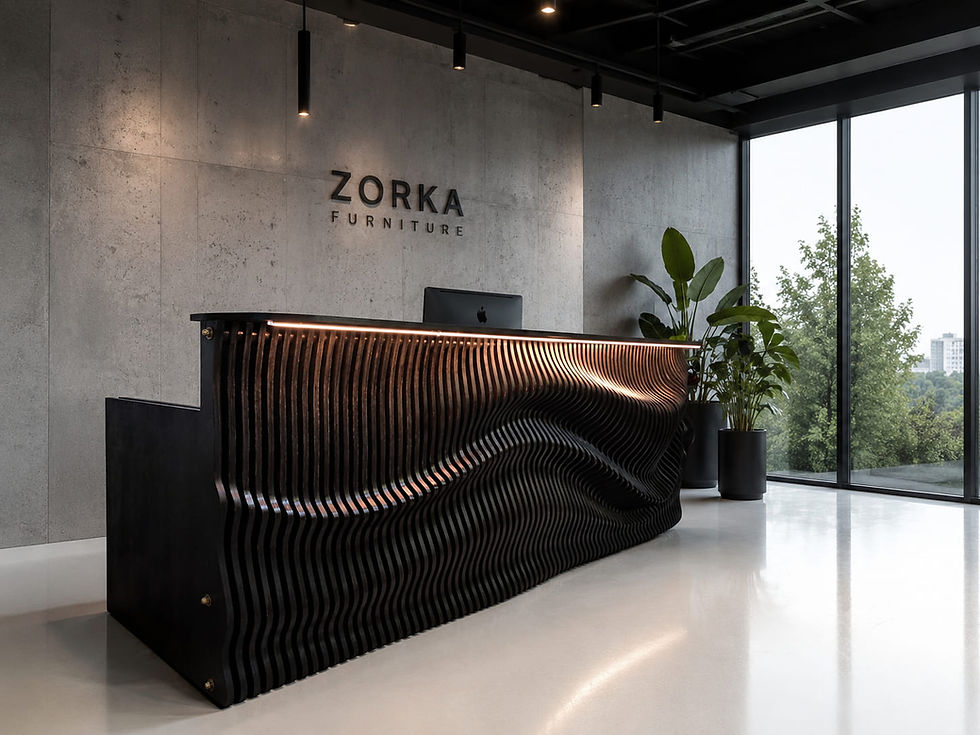
Today's office interiors focus on creating environments that inspire collaboration, creativity, and wellbeing.
Several trends continue shaping workplace design:
Natural Materials
Wood remains one of the most requested materials because it introduces warmth into contemporary interiors while balancing concrete, steel, and glass.
Sculptural Furniture
Architectural desks are increasingly replacing conventional office furniture, allowing workspaces to express the company's identity through design.
Flexible Layouts
Businesses now favor adaptable furniture that can evolve alongside changing teams and work styles.
Integrated Technology
Modern office desks often incorporate concealed cable management, wireless charging, power integration, and discreet technology solutions without compromising aesthetics.
Residential Influence
Many contemporary offices borrow design principles from luxury homes, creating work environments that feel more comfortable, welcoming, and human-centered.
Designing Around the Workspace
Exceptional offices are rarely created by selecting individual furniture pieces independently.
Instead, architects consider the workspace as a complete composition.
The office desk should work together with:
Reception areas
Conference tables
Storage systems
Lighting
Acoustic panels
Lounge furniture
Wall treatments
Flooring
Architectural details
When every element shares the same design language, the office feels cohesive, intentional, and professionally executed.
Office Furniture That Reflects Company Values
Clients often form opinions within seconds of entering an office.
Furniture plays an important role in shaping those first impressions.
A thoughtfully designed workspace communicates:
Professionalism
Attention to detail
Creativity
Stability
Innovation
Commitment to quality
An architectural office desk becomes more than furniture—it becomes part of the company's visual identity.
Long-Term Value

Unlike mass-produced office furniture that may need replacement after only a few years, a well-crafted custom office desk is designed for long-term performance.
Its durability, timeless design, and premium materials make it an investment that continues adding value throughout the life of the office.
For businesses seeking to create inspiring workplaces while reinforcing their professional image, custom office furniture represents one of the most meaningful design investments available.
Office Design Trends
The modern workplace continues to evolve as businesses rethink how employees collaborate, focus, and interact. Today's office is expected to support productivity while also reflecting company culture, attracting talent, and creating memorable experiences for clients and visitors.
Several trends continue to shape contemporary office furniture design.
Architectural Furniture
Office furniture is increasingly designed as part of the architecture rather than simply filling available space.
Instead of standard workstations, companies invest in sculptural desks, custom conference tables, integrated reception areas, and architectural storage systems that create a cohesive visual language throughout the workplace.
Warm Minimalism
Minimalism remains one of the strongest influences in office design, but today's interiors are noticeably warmer than those of a decade ago.
Natural wood, soft lighting, textured finishes, and carefully selected materials replace cold, sterile environments while preserving clean contemporary aesthetics.
This approach creates offices that feel both professional and welcoming.
Flexible Workspaces
Modern offices must adapt to changing business needs.
Rather than creating rigid layouts, designers increasingly specify modular furniture systems that can evolve as teams grow, departments change, or collaborative requirements shift.
Custom office desks make this flexibility easier to achieve because dimensions and configurations are tailored to each project.
Technology Integration
Technology is expected to remain invisible.
Today's premium office desks often include:
Hidden cable management
Built-in power outlets
Wireless charging compatibility
Integrated lighting
Monitor management systems
Concealed technical access
These features improve functionality while maintaining clean architectural lines.
Sustainable Design
Environmental responsibility has become a priority for many businesses.
Companies increasingly seek furniture manufactured using responsibly sourced materials, durable construction methods, and finishes designed for long service life.
High-quality office furniture supports sustainability by remaining relevant and functional for many years rather than requiring frequent replacement.
How to Choose the Right Office Desk
Before investing in office furniture, consider the following factors.
Consideration | Recommendation |
Company Size | Plan for both current needs and future growth. |
Available Space | Maintain comfortable circulation around each workstation. |
Daily Workflow | Choose layouts that support the way employees actually work. |
Storage Requirements | Integrate drawers, cabinets, or shelving where necessary. |
Technology | Plan cable management and power access from the beginning. |
Interior Design | Select materials and finishes that complement the architecture. |
A well-planned office desk improves productivity while enhancing the overall appearance of the workspace.
Standard Office Furniture vs. Custom Office Furniture

Standard Office Furniture | Custom Office Furniture |
Fixed dimensions | Built specifically for your space |
Limited finish options | Unlimited material and finish choices |
Generic appearance | Reflects company identity |
Standard storage | Tailored storage solutions |
Mass production | Handcrafted to order |
Short design lifecycle | Timeless architectural design |
For businesses investing in long-term office environments, custom furniture offers significantly greater flexibility and value.
Frequently Asked Questions
Why choose a wooden office desk?
Wood provides warmth, durability, and timeless aesthetics while creating a more comfortable and inviting work environment.
Is a custom office desk worth the investment?
Yes. A custom office desk is designed specifically for your workspace, improving functionality, maximizing available space, and reinforcing your company's professional image.
What materials are available?
Office desks can be manufactured using premium birch plywood, oak plywood, MDF for painted finishes, and customized with wood, stone, quartz, or other countertop materials depending on the project.
Can office desks be customized?
Absolutely. Dimensions, finishes, storage, cable management, desktop materials, and overall configuration can all be tailored to your requirements.
Are custom office desks suitable for commercial use?
Yes. They are engineered for offices, coworking spaces, executive suites, medical practices, hospitality environments, educational facilities, and other commercial applications.
How do I choose the correct desk size?
The ideal size depends on available space, the number of users, equipment requirements, and workflow. Custom manufacturing allows desks to be built to virtually any dimensions.
What finish is best for an office desk?
The best finish depends on the desired appearance and level of maintenance. Natural oil finishes highlight the wood grain, while painted finishes create a clean contemporary look.
Can cable management be integrated?
Yes. Modern office desks can include concealed cable routing, power access, charging solutions, and other integrated technology features.
How long does a custom office desk last?
With premium materials and proper maintenance, a custom office desk can provide decades of reliable performance while maintaining its appearance.
Why is custom office furniture becoming more popular?
Businesses increasingly recognize that furniture influences productivity, employee wellbeing, company branding, and client perception. Custom solutions provide greater flexibility, superior quality, and a unique architectural identity.
Final Thoughts
The office desk has become much more than a functional workstation. It now serves as one of the defining elements of contemporary workplace design, influencing productivity, collaboration, and the overall perception of a business.
A thoughtfully designed wooden office desk combines architectural elegance with everyday practicality. Its natural materials introduce warmth into modern interiors, while custom dimensions and premium craftsmanship ensure that every workspace is tailored to the people who use it.
Whether furnishing a private executive office, a collaborative studio, or an entire corporate headquarters, investing in a custom office desk is an investment in the long-term quality, identity, and performance of your workplace.
The best office furniture does more than support work—it shapes the experience of work itself.


Comments