
Table Design: The Complete Guide to Modern Custom Table Design for Contemporary Interiors
Updated: Aug 30

The best interiors are built around a focal point. In living rooms, it may be a fireplace. In offices, it might be a reception desk or conference area. In dining spaces, however, the centerpiece is almost always the table.
A thoughtfully executed table design does much more than provide a flat surface for dining or work. It shapes how people gather, influences movement throughout a room, reflects architectural style, and often becomes the most recognizable furniture piece within an interior.
Today's homeowners, architects, interior designers, and commercial developers expect far more than standard furniture. They seek tables that combine functionality with exceptional craftsmanship, premium materials, and timeless aesthetics. Whether designing a luxury residence, a modern office, a boutique hotel, or an upscale restaurant, the right table has the ability to define the entire space.
Modern technology has also transformed what is possible. Advanced CNC manufacturing, digital modeling, and precision engineering now allow designers to create sculptural forms, flowing curves, layered constructions, and complex parametric geometries that were impossible only a few decades ago.
At Zorka Furniture, we specialize in handcrafted custom tables that combine architectural design, premium materials, and precision manufacturing. Every table is built to order, allowing us to create furniture that perfectly complements each client's space while delivering lasting durability and distinctive visual impact.
In this guide, you'll learn everything about modern table design—from choosing the right style and materials to understanding manufacturing methods, custom options, and current architectural trends.
What Is Table Design?
At its core, table design is the process of combining form, function, engineering, and craftsmanship into a single piece of furniture that serves both practical and aesthetic purposes.
While every table provides a surface for dining, working, meeting, or displaying objects, exceptional table design goes much further. It considers how the table interacts with the surrounding architecture, how people move around it, how materials age over time, and how proportions influence the visual balance of a room.
Professional designers evaluate a table as an architectural element rather than simply another piece of furniture.
An outstanding table successfully combines:
Functionality
Ergonomics
Structural stability
Material quality
Craftsmanship
Visual harmony
Long-term durability
When these elements work together, a table becomes more than furniture—it becomes the centerpiece of everyday life.
Why Table Design Matters
Few furniture pieces influence an interior as much as the table.
Unlike accent furniture, decorative accessories, or shelving, a table naturally attracts attention because people gather around it. Families share meals, colleagues collaborate, clients meet, children complete homework, and guests spend hours together around a table.
This makes thoughtful table design one of the most important investments in any interior.
A well-designed table helps:
Create a visual focal point
Improve room proportions
Encourage conversation
Enhance circulation
Reflect architectural style
Increase property value
Improve daily comfort
Create memorable experiences
Interior designers often begin planning a dining room around the table itself because its size, shape, and material influence every surrounding design decision—from lighting and flooring to seating and artwork.
The Evolution of Modern Table Design
Tables have existed for thousands of years, but their role has changed dramatically.
Historically, tables were purely functional objects. Construction focused on durability, while decorative details were typically limited to carved legs or ornamental edges. Materials were chosen based on local availability rather than design flexibility.
The introduction of industrial manufacturing increased production speed but also led to standardized furniture with limited originality.
Today, advances in digital technology have completely transformed table design.
Modern furniture designers can use advanced software to create highly complex geometries that are then manufactured with CNC precision. This combination of technology and craftsmanship allows tables to become sculptural architectural elements while maintaining outstanding structural performance.
Contemporary table design frequently incorporates:
Organic curves
Minimalist forms
Sculptural silhouettes
Layered construction
Architectural bases
Hidden structural reinforcement
Precision CNC fabrication
Sustainable materials
Custom dimensions
Integrated lighting and technology
The result is furniture that serves practical needs while also functioning as an artistic statement.
Types of Table Designs
Not every table serves the same purpose. Different environments require different proportions, construction methods, and visual styles.
Dining tables remain the social center of the home. They are designed to encourage conversation, provide comfortable seating, and become the visual anchor of the dining space. Modern dining tables range from minimalist rectangular designs to sculptural architectural pieces with expressive bases.
Coffee tables are typically lower in height and intended for living rooms and lounge areas. While smaller than dining tables, they often serve as decorative focal points and complement surrounding seating arrangements.
Conference tables are engineered for professional environments where collaboration, meetings, and presentations take place. They often incorporate cable management, power integration, and large seating capacities while maintaining a clean, executive appearance.
Reception tables and feature tables create the first impression in offices, hotels, medical clinics, and commercial spaces. Their design frequently emphasizes premium materials, custom branding, and architectural forms that reinforce the identity of the business.
Console tables provide both function and decoration in entryways, hallways, and hospitality spaces. Their narrow proportions make them ideal for displaying artwork, lighting, or decorative accessories without occupying significant floor space.
Outdoor tables are specifically engineered to withstand changing weather conditions while maintaining their structural integrity and appearance. They require durable materials, weather-resistant finishes, and construction techniques suitable for long-term exterior use.
Comparison of Common Table Types
Table Type | Primary Use | Typical Location | Design Priority |
Dining Table | Meals & Gathering | Dining Room | Comfort & Presence |
Coffee Table | Lounge Area | Living Room | Style & Accessibility |
Conference Table | Meetings | Offices | Functionality & Technology |
Reception Table | First Impressions | Commercial Spaces | Branding & Architecture |
Console Table | Display & Storage | Entryways | Decorative Elegance |
Outdoor Table | Exterior Dining | Patios & Gardens | Weather Resistance |

Why Great Table Design Begins with Purpose
The most successful tables are never designed around appearance alone.
Architects and furniture designers begin by asking fundamental questions:
Who will use the table?
How many people should it accommodate?
Will it be used daily or occasionally?
Is it intended for residential or commercial use?
Should it blend into the interior or become a sculptural focal point?
What materials best suit the environment?
What level of durability is required?
Answering these questions before the design process begins ensures that the finished table performs beautifully while complementing the surrounding architecture.
Rather than simply filling a room, a thoughtfully designed table becomes an integral part of the space—one that supports everyday life while expressing craftsmanship, innovation, and timeless design.
Popular Table Design Styles
Choosing the right table design begins with understanding the overall style of the interior. While functionality remains essential, the visual language of a table has a profound impact on how a room feels.
Today's designers rarely view a table as an isolated piece of furniture. Instead, it is considered part of the architecture—a feature that should complement the surrounding materials, lighting, flooring, and spatial proportions.
Below are some of the most influential table design styles found in contemporary interiors.
Modern Table Design
Modern tables emphasize clean geometry, balanced proportions, and restrained detailing. Decoration is kept to a minimum, allowing the quality of materials and craftsmanship to become the primary focus.
Common characteristics include:
Clean lines
Minimal visual clutter
Premium natural materials
Sculptural bases
Neutral finishes
Functional elegance
Modern tables work exceptionally well in contemporary homes, luxury apartments, and executive offices.
Contemporary Table Design
Although often confused with modern design, contemporary furniture evolves with current trends.
Contemporary tables frequently combine multiple materials, including wood, steel, glass, and stone, while maintaining a refined architectural appearance.
Designers often use flowing silhouettes and bold proportions to create visual interest without overwhelming the surrounding space.
Scandinavian Table Design
Scandinavian interiors prioritize simplicity, natural light, and comfort.
Typical Scandinavian tables feature:
Light wood finishes
Rounded edges
Minimal detailing
Functional proportions
Soft organic forms
These tables create calm, inviting interiors where natural materials remain the focal point.
Organic Modern Table Design

Organic Modern has become one of today's fastest-growing interior styles.
It combines minimalist architecture with warm natural materials and flowing shapes inspired by nature.
Tables within this style often feature:
Soft curves
Sculptural wooden bases
Rounded tabletops
Neutral colors
Visible wood grain
Handcrafted character
The result feels luxurious without appearing overly formal.
Industrial Table Design
Industrial tables celebrate structural honesty.
Steel frames, exposed fasteners, thick wooden tops, and raw materials create furniture with a bold architectural presence.
Although originally inspired by converted warehouses and factories, industrial tables now appear in many modern homes, restaurants, and offices.
Japandi Table Design
Japandi combines Japanese simplicity with Scandinavian warmth.
Furniture emphasizes craftsmanship, clean proportions, and natural materials while avoiding unnecessary ornamentation.
The aesthetic feels peaceful, balanced, and timeless.
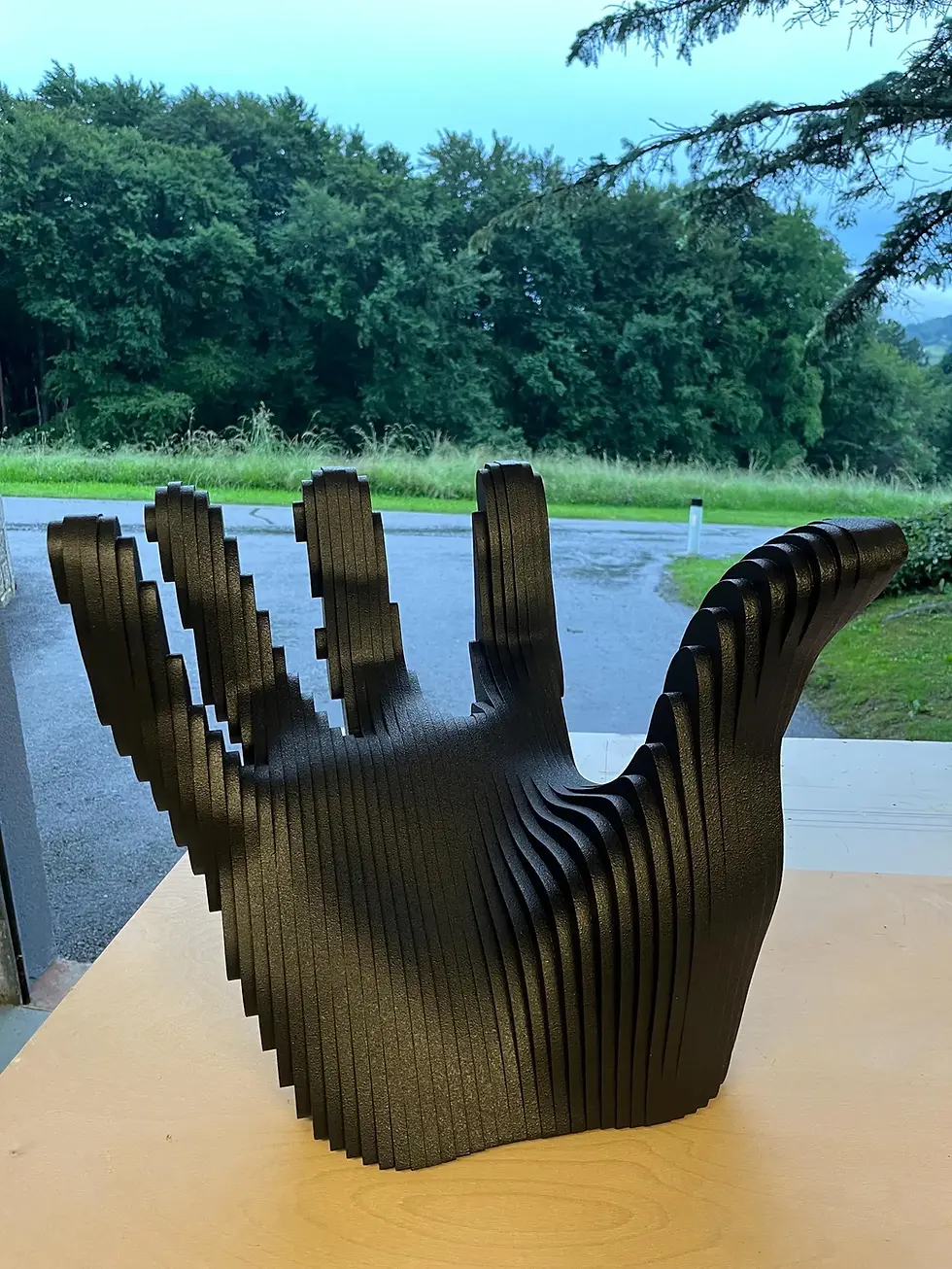
Parametric Table Design
Perhaps the most innovative direction in modern furniture, parametric table design combines computational design with precision CNC manufacturing.
Instead of relying on conventional legs and frames, parametric tables are formed from carefully engineered layered structures that create rhythm, movement, and depth.
These tables function equally as furniture and architectural sculpture.
Comparison of Popular Table Design Styles
Style | Best For | Visual Character | Complexity |
Modern | Homes, Offices | Clean & Minimal | ★★★☆☆ |
Contemporary | Luxury Interiors | Current & Elegant | ★★★★☆ |
Scandinavian | Residential | Warm & Light | ★★☆☆☆ |
Organic Modern | Luxury Homes | Soft & Natural | ★★★★☆ |
Industrial | Restaurants, Lofts | Bold & Structural | ★★★☆☆ |
Japandi | Minimal Interiors | Calm & Balanced | ★★★☆☆ |
Parametric | Architectural Spaces | Sculptural & Iconic | ★★★★★ |
Why Wooden Table Design Remains the Gold Standard
Despite the availability of glass, concrete, steel, and composite materials, wooden table design continues to dominate premium residential and commercial interiors.
Wood offers something that manufactured materials cannot easily replicate—natural warmth, texture, depth, and individuality.
Every piece of wood contains unique grain patterns, subtle color variations, and organic character that make each table one of a kind.
Beyond appearance, wood also provides excellent structural performance while remaining comfortable to the touch and visually timeless.
For architects and interior designers, wood creates a valuable contrast against concrete, stone, steel, and glass, softening contemporary spaces without sacrificing sophistication.

Best Materials for Table Design
The material selected for a table influences far more than its appearance.
It determines:
Structural strength
Weight
Durability
Maintenance
Lifespan
Manufacturing possibilities
Overall cost
Each material offers unique advantages depending on the intended application.
Baltic Birch Plywood
Premium Baltic birch plywood has become one of the preferred materials for architectural furniture.
Unlike standard plywood, Baltic birch contains numerous thin hardwood veneers that create exceptional strength, stability, and machining precision.
Advantages include:
Excellent dimensional stability
Outstanding strength
Minimal warping
Precision CNC performance
Beautiful exposed layered edges
Ideal for sculptural furniture
It is particularly well suited for modern and parametric table designs.
Oak
Oak remains one of the world's most respected hardwoods.
Its prominent grain, durability, and timeless appearance make it an excellent choice for luxury dining tables.
Oak works beautifully in both traditional and contemporary interiors.
Walnut
Walnut is prized for its rich color and elegant grain.
Its deep chocolate tones create sophisticated interiors and are frequently specified for executive offices and luxury residences.
Ash
Ash combines high strength with a lighter visual appearance.
Its straight grain and excellent workability make it popular among furniture makers seeking durability without excessive weight.
Solid Hardwood
Solid hardwood tables provide outstanding longevity and can often be refinished multiple times over decades of use.
They remain among the most desirable choices for heirloom-quality furniture.
Glass
Glass tabletops create openness and allow surrounding architectural elements to remain visually prominent.
However, they require regular cleaning and provide less visual warmth than wood.
Natural Stone
Marble, quartz, and granite create an unmistakable sense of luxury.
Their weight and cost, however, require specialized structural support and professional installation.
Powder-Coated Steel
Steel is commonly used for structural bases because it provides exceptional strength while allowing slender profiles.
It pairs especially well with wooden tabletops in modern and industrial interiors.
Material Comparison
Material | Durability | Maintenance | Luxury Appearance | Best Applications |
Baltic Birch Plywood | ★★★★★ | ★★★★☆ | ★★★★★ | Sculptural & Parametric Tables |
Oak | ★★★★★ | ★★★★☆ | ★★★★★ | Dining Tables |
Walnut | ★★★★★ | ★★★★☆ | ★★★★★ | Luxury Residential |
Ash | ★★★★☆ | ★★★★☆ | ★★★★☆ | Contemporary Furniture |
Solid Hardwood | ★★★★★ | ★★★★☆ | ★★★★★ | Premium Dining Tables |
Glass | ★★★☆☆ | ★★☆☆☆ | ★★★★☆ | Modern Interiors |
Natural Stone | ★★★★★ | ★★★★☆ | ★★★★★ | Luxury Tables |
Powder-Coated Steel | ★★★★★ | ★★★★★ | ★★★★☆ | Bases & Commercial Furniture |
Parametric Table Design

One of the most exciting developments in contemporary furniture is the rise of parametric table design.
Rather than beginning with traditional woodworking techniques, parametric tables are created through advanced computational modeling. Designers establish a series of mathematical relationships that control curves, spacing, proportions, and structural behavior. These digital models are then translated into precisely manufactured components using CNC technology.
The result is furniture that appears fluid, sculptural, and dynamic while maintaining remarkable structural integrity.
Unlike conventional tables, where the base simply supports the tabletop, a parametric base becomes the defining architectural feature of the piece. Repeating layers create rhythm, depth, and an ever-changing play of light and shadow that transforms depending on the viewer's perspective.
Every angle reveals a different composition, making the table feel less like traditional furniture and more like a functional sculpture.
This approach also offers exceptional flexibility. Designers can adjust dimensions, curvature, spacing, and proportions without changing the underlying design logic, allowing each table to be tailored to a specific interior while preserving its visual identity.
As luxury residential and commercial projects increasingly seek unique, handcrafted furniture, parametric design has become one of the defining directions in contemporary architecture.
At Zorka Furniture, parametric tables are designed using precision digital modeling, CNC fabrication, and meticulous hand-finishing, resulting in furniture that combines engineering, craftsmanship, and artistic expression into a single architectural statement.
Sculptural Table Design
Over the past decade, one of the most influential movements in furniture design has been the rise of sculptural tables.
Unlike traditional tables, where the base is intentionally understated, sculptural table design celebrates structure as the defining visual element. The base becomes an architectural composition that creates rhythm, movement, and depth while supporting the tabletop.
Rather than hiding engineering, sculptural tables showcase it.
Architects increasingly specify sculptural tables because they contribute to the overall architectural language of a space instead of functioning solely as furniture.
Common characteristics include:
Flowing geometric forms
Organic curves
Layered construction
Bold architectural silhouettes
Visible craftsmanship
Premium natural materials
Dynamic light and shadow effects
A sculptural table often becomes the centerpiece of an interior, drawing attention while maintaining practical functionality for everyday use.
Residential Applications

Custom table design allows homeowners to create furniture that perfectly matches their lifestyle and architecture.
Unlike mass-produced furniture, a custom table can be tailored to the exact proportions of a room, ensuring visual balance while maximizing functionality.
Residential tables are commonly designed for:
Dining rooms
Open-concept kitchens
Great rooms
Breakfast areas
Home offices
Libraries
Entertainment spaces
Outdoor patios
Many homeowners choose custom tables because they cannot find the desired combination of dimensions, materials, and design in standard retail collections.
A handcrafted table also becomes a long-term investment that often remains part of a home for decades.
Commercial Applications
Commercial interiors require furniture capable of handling continuous daily use while maintaining its appearance.
Architectural tables play an important role in defining the identity of commercial environments.
Popular applications include:
Corporate offices
Executive boardrooms
Hotels
Restaurants
Cafés
Medical offices
Reception areas
Universities
Libraries
Museums
Retail stores
Luxury showrooms
Custom commercial tables can also incorporate branding elements, integrated cable management, power outlets, lighting, and specialized structural reinforcement.
Residential vs. Commercial Tables
Feature | Residential | Commercial |
Daily Usage | Moderate | Heavy |
Structural Reinforcement | Optional | Recommended |
Custom Dimensions | ✔ | ✔ |
Integrated Technology | Optional | Common |
Brand Integration | Rare | Frequently Used |
Wear Resistance | High | Very High |
Lifespan | Long | Designed for Continuous Use |
Principles of Great Dining Table Design
The most successful dining tables combine aesthetics with ergonomics.
A beautiful table that feels uncomfortable or limits movement ultimately fails its purpose.
Professional furniture designers carefully evaluate several critical factors before finalizing a design.
Proportion
A dining table should feel balanced within the room.
Oversized tables reduce circulation, while undersized tables often appear disconnected from the surrounding architecture.
Seating Comfort
Each person should have enough personal space to dine comfortably.
Most designers recommend allowing approximately 24–30 inches of table width per person.
Leg Clearance
Comfort depends not only on tabletop size but also on the position of the base.
Poorly placed legs can restrict seating flexibility.
Modern pedestal and sculptural bases often improve comfort because they eliminate corner legs.
Circulation Space
People should be able to walk comfortably around the table.
Maintaining sufficient clearance improves both functionality and visual balance.
Material Balance
The tabletop, base, chairs, flooring, and surrounding finishes should complement one another rather than compete for attention.
Successful interiors create harmony through proportion rather than excessive decoration.
Standard Dining Table Dimensions
Although every custom project is unique, standard dimensions provide a useful starting point.
Common Dining Table Sizes
Seats | Recommended Size |
2 | 30–36 in Round |
4 | 48 in Round or 48 × 30 in |
6 | 72 × 36 in |
8 | 96 × 40 in |
10 | 120 × 42 in |
12 | 144 × 48 in |
Recommended Table Heights
Table Type | Height |
Coffee Table | 16–18 in |
Dining Table | 29–30 in |
Counter Height | 34–36 in |
Bar Height | 40–42 in |
Conference Table | 29–30 in |
Reception Feature Table | Varies by Design |
Choosing the Right Table Shape
The shape of a table significantly influences circulation, seating capacity, and the overall atmosphere of a room.

Rectangular Tables
The most versatile and widely used option.
Ideal for:
Large families
Formal dining rooms
Conference rooms
Restaurants
Advantages:
Maximum seating capacity
Excellent space efficiency
Easy to expand
Round Tables
Round tables naturally encourage conversation because every guest remains equally connected.
Best suited for:
Smaller dining rooms
Breakfast areas
Intimate gatherings
Oval Tables
Oval tables combine the efficiency of rectangular tables with the softer appearance of curved edges.
They work especially well in transitional and contemporary interiors.
Organic Tables
Organic-shaped tables feature flowing outlines inspired by nature.
Their asymmetrical forms soften modern interiors and create a relaxed atmosphere.
Parametric tables are distinguished by their sculptural bases rather than the tabletop alone.
They frequently become architectural focal points and are increasingly specified for luxury residential and commercial interiors.
Comparison of Table Shapes
Shape | Seating Capacity | Best For | Style |
Rectangular | ★★★★★ | Dining Rooms | Traditional & Modern |
Round | ★★★★☆ | Small Spaces | Contemporary |
Oval | ★★★★★ | Open Layouts | Elegant |
Square | ★★★☆☆ | Compact Dining Areas | Modern |
Organic | ★★★★☆ | Luxury Interiors | Organic Modern |
Parametric | ★★★★★ | Architectural Projects | Sculptural |
Table Base Designs
The table base plays a crucial role in both appearance and structural performance.
A carefully designed base not only supports the tabletop but also defines the overall character of the furniture.
Four-Leg Base
The classic solution.
Reliable, familiar, and suitable for almost every table style.
Pedestal Base
A central pedestal improves legroom while creating a cleaner visual appearance.
Ideal for round and oval dining tables.
Trestle Base
Trestle bases distribute weight efficiently across long tabletops.
They are popular for farmhouse, contemporary, and commercial dining tables.
Sculptural Base
A sculptural base transforms the table into an architectural statement.
These designs emphasize flowing geometry, visual movement, and craftsmanship.
Parametric Base
One of the most advanced construction methods available today.
Layered CNC-cut components create exceptional rigidity while generating dynamic patterns of light and shadow.
Every viewing angle reveals a different composition, making the base itself a work of art.
Comparison of Table Base Designs
Base Type | Stability | Legroom | Visual Impact | Best Applications |
Four-Leg | ★★★★★ | ★★★☆☆ | ★★☆☆☆ | Universal |
Pedestal | ★★★★☆ | ★★★★★ | ★★★★☆ | Dining Tables |
Trestle | ★★★★★ | ★★★★☆ | ★★★☆☆ | Large Tables |
Sculptural | ★★★★★ | ★★★★★ | ★★★★★ | Luxury Interiors |
Parametric | ★★★★★ | ★★★★★ | ★★★★★ | Architectural & Custom Projects |
Custom Table Design
While ready-made furniture offers convenience, it rarely satisfies the unique requirements of exceptional interiors.
A custom table design allows every aspect of the furniture to be tailored to the space, ensuring the finished piece feels fully integrated with its surroundings rather than simply placed within them.
Unlike mass-produced tables manufactured in standardized dimensions, custom tables are designed around the client's exact needs.
This includes:
Overall dimensions
Seating capacity
Table shape
Base configuration
Material selection
Finish options
Color and stain
Structural reinforcement
Integrated cable management
Architectural details
Brand-specific elements
Lighting integration
For architects and interior designers, custom furniture provides complete creative freedom while ensuring every proportion complements the surrounding architecture.
At Zorka Furniture, every table begins as a custom project. We collaborate with homeowners, designers, architects, and commercial clients to create furniture that balances functionality, structural integrity, and sculptural aesthetics.
Our Design Process
Every custom table follows a carefully developed workflow that ensures precision from concept to installation.
Consultation
We begin by understanding the project requirements, intended use, architectural style, dimensions, material preferences, and functional goals.
Digital 3D Modeling
Every table is designed in a detailed 3D environment, allowing clients to review proportions, materials, and construction before manufacturing begins.
This stage makes it easy to refine the design until every detail is approved.
Engineering
Once the design is finalized, structural elements are carefully engineered to ensure long-term stability and durability.
Large tabletops, sculptural bases, and commercial installations often require hidden reinforcement to maintain strength without compromising the visual design.
CNC Manufacturing
Each component is precision-cut using advanced CNC equipment.
Digital fabrication ensures exceptional consistency while allowing highly complex geometries that would be impossible to produce using traditional woodworking methods.
Hand Assembly
After machining, every component is carefully inspected, assembled, sanded, and adjusted by hand.
This combination of digital precision and traditional craftsmanship produces furniture that feels refined from every angle.
Finishing
Premium stains, paints, oils, or protective coatings are applied according to the selected material and intended environment.
Every finish is chosen to enhance the natural beauty of the material while providing long-term protection.
Custom Table Manufacturing Process
Step | Description |
Consultation | Project goals, dimensions, materials, and budget |
3D Design | Photorealistic custom modeling |
Engineering | Structural optimization and reinforcement |
CNC Fabrication | Precision machining of every component |
Hand Sanding | Surface refinement and detail work |
Assembly | Test fitting and quality inspection |
Finishing | Stain, paint, oil, or protective coating |
Packaging | Secure shipping preparation |
Delivery | Nationwide freight shipping across the USA |
CNC Precision Manufacturing
Modern furniture manufacturing combines advanced technology with traditional craftsmanship.
CNC machining allows designers to achieve an extraordinary level of precision while maintaining consistency across hundreds of individual components.
Advantages include:
Exceptional accuracy
Perfect repeatability
Complex geometries
Tight tolerances
Efficient material utilization
Superior fit during assembly
For layered architectural furniture such as parametric tables, CNC technology is essential.
Every individual component aligns perfectly with the next, creating seamless transitions and exceptionally clean construction.
Handcrafted Finishing
Technology alone cannot produce luxury furniture.
After machining, every table is carefully finished by experienced craftsmen.
This includes:
Edge refinement
Progressive sanding
Surface inspection
Color matching
Finish application
Final quality control
These final steps give each table the warmth, depth, and character that distinguish handcrafted furniture from factory-produced products.
How Much Does a Custom Table Cost?
Every project is unique, making it impossible to assign a single price to custom table design.
The final investment depends on numerous variables.
Factors That Influence Cost
Factor | Impact on Price |
Table Size | Larger tables require more material and engineering. |
Material Selection | Hardwood, plywood, stone, and specialty finishes vary in cost. |
Design Complexity | Sculptural and parametric bases require additional manufacturing time. |
Finish | Premium stains, paints, and protective coatings increase labor. |
Structural Reinforcement | Large commercial tables often require hidden support systems. |
Shipping | Depends on destination, weight, and dimensions. |
Installation | Optional on-site assembly for selected projects. |
Although custom furniture requires a greater initial investment than mass-produced alternatives, it offers significantly greater longevity, superior craftsmanship, and a completely unique result.
Caring for Your Custom Table
A professionally finished table requires minimal maintenance.
To preserve its appearance:
Clean with a soft microfiber cloth.
Wipe spills promptly.
Avoid abrasive cleaners.
Use coasters and placemats when appropriate.
Protect surfaces from prolonged moisture exposure.
Follow the recommended maintenance schedule for natural wood finishes.
With proper care, a handcrafted table can remain beautiful for generations.
Frequently Asked Questions
What is custom table design?
Custom table design is the process of creating a table specifically for a client's dimensions, materials, style preferences, and functional requirements.
What materials are best for modern tables?
Popular options include Baltic birch plywood, oak, walnut, ash, natural stone, steel, and glass. The best choice depends on the intended use and desired aesthetic.
Why choose a custom table instead of a mass-produced one?
Custom tables provide exact dimensions, premium materials, superior craftsmanship, and a design tailored specifically to your space.
Are parametric tables durable?
Yes. Properly engineered parametric tables combine precision CNC fabrication with strong layered construction, resulting in excellent structural performance.
Can I choose my own dimensions?
Absolutely. Every Zorka Furniture table is built to order and can be customized to your required size.
Can I select my own finish?
Yes. We offer a wide range of stains, paints, natural finishes, and protective coatings.
Do you build commercial tables?
Yes. We manufacture custom tables for offices, hotels, restaurants, retail spaces, medical facilities, and other commercial environments.
How long does production take?
Production typically takes 10 business days to one month after the final design has been approved.
Do you ship across the United States?
Yes. We provide nationwide freight shipping throughout the continental United States.
Can I request a completely original design?
Yes. Every project can be developed from scratch based on your ideas, drawings, reference images, or architectural plans.
Why Choose Zorka Furniture?
At Zorka Furniture, we believe exceptional furniture should combine craftsmanship, engineering, and architectural design.
Every table is built to order using premium materials, precision CNC manufacturing, and meticulous hand-finishing.
Our clients choose us because we offer:
Fully custom designs
Architectural furniture solutions
Premium Baltic birch plywood and hardwood options
Precision CNC fabrication
Sculptural and parametric expertise
Handcrafted finishing
Residential and commercial manufacturing
Nationwide shipping across the United States
Rather than producing furniture for the mass market, we create one-of-a-kind pieces designed to become lasting architectural features.
Final Thoughts
Exceptional table design goes far beyond aesthetics. It is the balance of proportion, engineering, material selection, craftsmanship, and functionality.
Whether you are furnishing a private residence, designing a hospitality project, planning a corporate workspace, or creating a signature interior, the right table becomes more than furniture—it becomes the centerpiece around which people gather, collaborate, celebrate, and create lasting memories.
At Zorka Furniture, we combine advanced digital design, precision manufacturing, and handcrafted artistry to produce custom tables that are built to perform beautifully for years while making a distinctive architectural statement.
If you're looking for a custom dining table, modern sculptural table, or parametric table designed specifically for your project, our team is ready to bring your vision to life.


Comments