
Custom Desk — an Architect’s Perspective on Made-to-Order Workspaces
- Jan 12
- 2 min read

As an architect and designer, I don’t see a custom desk as a standalone piece of furniture. I see it as an architectural element — a functional structure that shapes how a space is used, perceived, and experienced every single day.
A desk is where focus happens. Where decisions are made. Where people interact with a brand or a workspace. That’s why standard, mass-produced solutions almost never work in thoughtfully designed interiors.
Why architects choose a custom desk
In real projects — offices, studios, reception areas — there are always constraints:
non-standard room dimensions
complex wall geometry
the need to integrate a desk into the architecture, not simply place it
cable management, storage, ergonomics, and circulation requirements
A custom desk solves these challenges holistically, without compromise.

Custom desk as an architectural object
In well-designed interiors, a desk often becomes:
a visual anchor of the space
an extension of the wall or volume
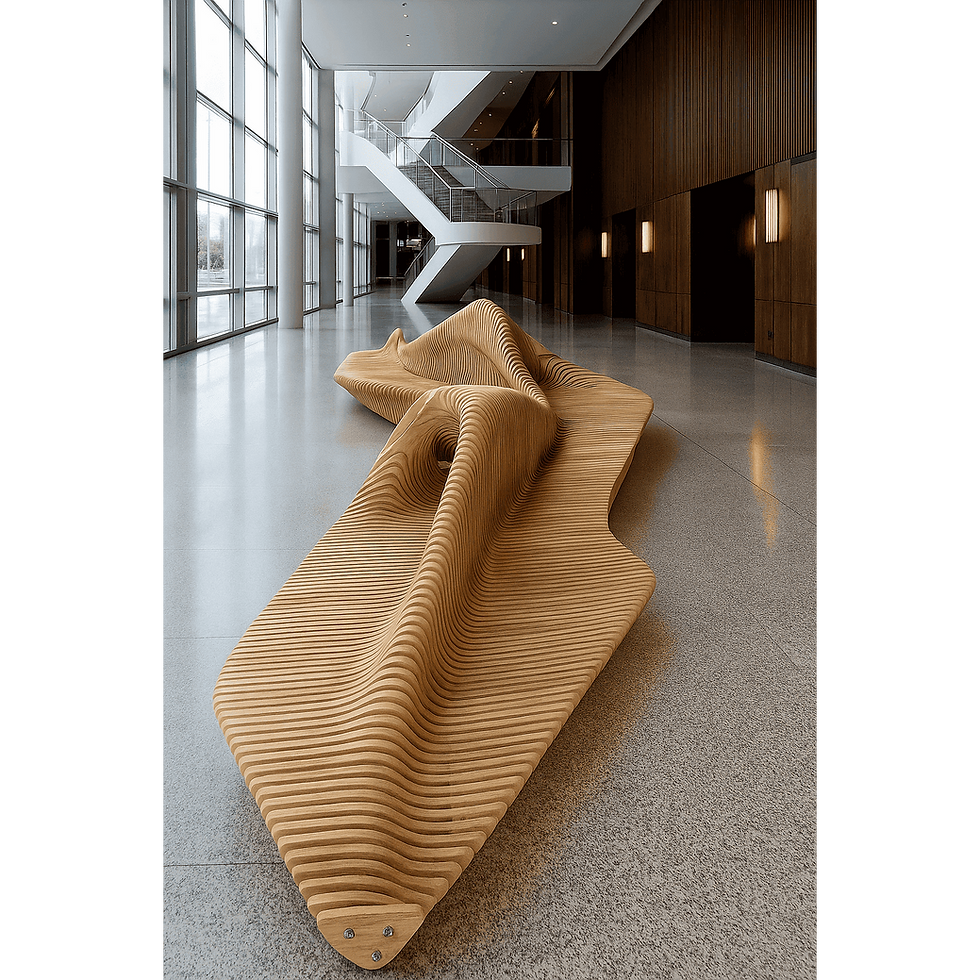
a sculptural focal point
a functional architectural form
This is especially true for reception desks and open offices, where the desk creates the first impression of a brand or company.
Form and material follow logic, not decoration
In our projects, every custom desk is designed using architectural principles:
honest materials such as wood and plywood
visible structure and layered construction
depth, rhythm, and shadow
no unnecessary ornament
A wooden custom desk introduces warmth, tactility, and balance — especially important in modern minimalist interiors dominated by glass, concrete, and metal.

Designed around real use scenarios
We never start with form alone. We start with questions:
How many people work at the desk?
How many hours per day is it used?
Where do cables and power need to run?
Which areas should remain open, and which should be hidden?
Should the desk be fixed or modular?
Only after answering these questions does the form emerge. That’s why a custom desk is always functional first — and expressive by design.
Real projects, not templates
In real residential and commercial interiors, a custom desk:
is designed for a specific space
is built to exact dimensions
reflects the brand, identity, and philosophy of the client
becomes part of the visual language of the interior
This approach is especially valued by architectural studios, design offices, creative companies, and public spaces that want more than generic furniture.
Custom desk as a long-term investment

From an architectural point of view, a custom desk:
lasts significantly longer than standard furniture
remains visually relevant over time
increases the perceived value of the interior
communicates professionalism and intention
That’s why architects and designers choose custom desks when the space truly matters.
Conclusion
A custom desk is not just a place to work. It is a functional tool, an architectural structure, and a visual statement. When designed for a specific space and real human use, it stops being furniture — and becomes architecture.


Comments